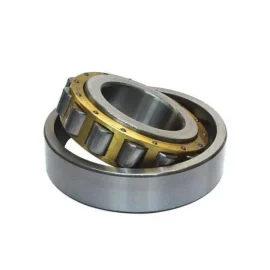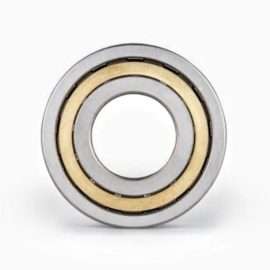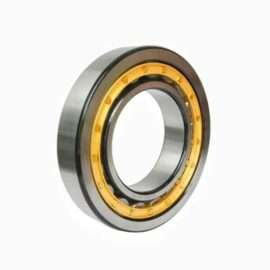


The NJ2210ECP is a specific type of cylindrical roller bearing. Here’s a breakdown of its key features and specifications:
1. Leje Type: Cylindrical Roller Bearing
- Cylindrical roller bearings are designed to handle high radial loads and moderate axial loads. They are commonly used in applications where high load capacity and rigidity are required.
2. Designation: NJ2210ECP
- NJ: Indicates the bearing type. “NJ” refers to a cylindrical roller bearing with a single rib on the outer ring and two ribs on the inner ring, allowing for axial displacement in one direction.
- 22: Represents the series. The “22” series typically indicates a medium-heavy duty bearing with a larger cross-section.
- 10: Specifies the bore diameter. In this case, “10” corresponds to a 50 mm bore diameter (10 x 5 = 50 Mm).
- EC: Stands for “Enhanced Capacity.” This indicates that the bearing has an optimized internal design, including improved roller geometry and surface finish, to increase load capacity and reduce stress.
- P: Indicates that the bearing is made of high-quality, heat-treated steel (typically P6 or P5 precision class), which provides better performance and durability.
3. Dimensioner:
- Bore Diameter (d): 50 Mm
- Outer Diameter (D): 90 Mm
- Bredde (B): 23 Mm
4. Load Ratings:
- Dynamic Load Rating (C): The maximum load the bearing can handle while rotating, typically in the range of 70-80 kN for this size.
- Static Load Rating (C0): The maximum load the bearing can handle while stationary, usually around 80-90 kN for this size.
5. Applications:
- Cylindrical roller bearings like the NJ2210ECP are commonly used in:
- Gearkasser
- Electric motors
- Industrial machinery
- Automotive applications
- Heavy-duty equipment
6. Advantages:
- High radial load capacity
- Moderate axial load capacity in one direction
- Enhanced durability and performance due to the “EC” design
- Suitable for high-speed applications
7. Maintenance:
- Proper lubrication is essential for optimal performance and longevity.
- Regular inspection for wear and tear is recommended, especially in high-load or high-speed applications.
If you need further details, such as exact load ratings or specific application recommendations, consult the manufacturer’s datasheet or a bearing supplier.