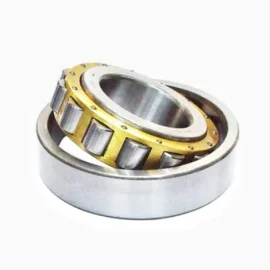


The NJ212ECP is a type of cylindrical roller bearing, commonly used in various industrial applications. Here’s a breakdown of its key features and specifications:
1. Bearing Type:
- NJ: This indicates the bearing type. “NJ” refers to a cylindrical roller bearing with a single flange on the outer ring and a double flange on the inner ring. This design allows for axial displacement in one direction.
2. Size and Dimensions:
- The “212” in the bearing code refers to its size. The dimensions for NJ212ECP are typically:
- Inner Diameter (d): 60 Mm
- Outer Diameter (D): 110 Mm
- Breite (B): 22 Mm
(Always verify dimensions with the manufacturer’s datasheet, as slight variations may exist.)
3. ECP Designation:
- EC: Stands for “Optimized Internal Design,” which means the bearing has a higher load capacity due to improved roller and raceway profiles.
- P: Indicates the use of glass fiber reinforced polyamide (PA66) as the cage material. This cage material is lightweight, durable, and suitable for high-speed applications.
4. Load Capacity:
- Cylindrical roller bearings like the NJ212ECP are designed to handle high radial loads and moderate axial loads (in one direction).
- The exact dynamic and static load ratings depend on the manufacturer’s specifications.
5. Applications:
- Cylindrical roller bearings are commonly used in:
- Electric motors
- Gearboxes
- Machine tools
- Automotive applications
- Industrial machinery
6. Lubrication and Maintenance:
- Proper lubrication is essential for optimal performance. Grease or oil lubrication can be used depending on the application.
- The bearing should be protected from contamination and operated within its temperature limits.
7. Manufacturer Variations:
- The NJ212ECP bearing is produced by various manufacturers (zum Beispiel., SKF, SCHWUCHTEL, NSK, etc.). While the basic dimensions are standardized, there may be slight differences in internal design, tolerances, or materials. Always refer to the specific manufacturer’s datasheet for detailed information.
If you need further details, such as load ratings, tolerances, or specific application guidance, let me know!