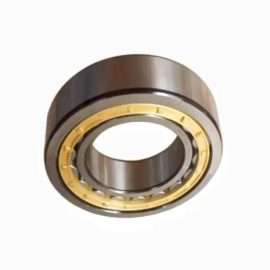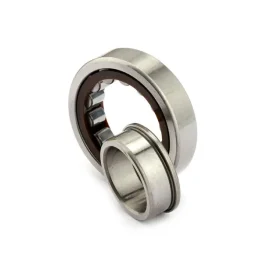


The NU2311ECP is a type of cylindrical roller bearing designed for specific applications. Here’s a breakdown of its key features and specifications:
1. Momo Mau: NU Series Cylindrical Roller Bearing
- The “NU” designation indicates that this bearing has two fixed ribs on the outer ring and no ribs on the inner ring. This allows the inner ring to move axially relative to the outer ring, making it suitable for applications with axial displacement.
2. Ngā Ahu:
- Bore Diameter (d): 55 mm
- Outer Diameter (D): 120 mm
- Whānui (B): 43 mm
3. ECP Designation:
- E: Optimized internal design for higher load capacity.
- C: Enhanced roller guidance for better performance under heavy loads or misalignment.
- P: High-quality, hardened steel cages (usually polyamide or brass) for improved durability and performance.
4. Load Capacity:
- High radial load capacity due to the cylindrical roller design.
- Limited axial load capacity (can only handle small axial loads).
5. Applications:
- Commonly used in machinery, gearboxes, electric motors, and industrial equipment where high radial loads and moderate speeds are present.
- Suitable for applications requiring axial displacement of the shaft.
6. Lubrication:
- Requires proper lubrication to ensure smooth operation and longevity. Grease or oil lubrication can be used depending on the application.
7. Material:
- Typically made from high-quality bearing steel (e.g., SUJ2 or equivalent) for durability and performance.
8. Precision:
- Manufactured to high precision standards (e.g., ISO P6 or ABEC 1) for reliable performance.
If you need further details, such as dynamic/static load ratings or specific installation instructions, consult the manufacturer’s datasheet or technical documentation.