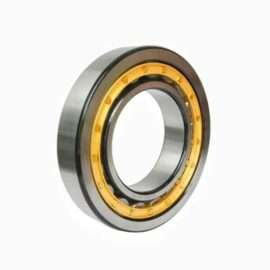


Den NU322 EM is a type of cylindrical roller bearing. Here’s a breakdown of its specifications and features:
1. Bearing Type:
- NU: This indicates the bearing is a cylindrical roller bearing with two flanges on the outer ring and no flanges on the inner ring. This design allows the inner ring to move axially relative to the outer ring, making it suitable for applications where axial displacement needs to be accommodated.
2. Dimensjoner:
- Den 322 in the bearing designation refers to its size. The dimensions for NU322 are typically:
- Bore Diameter (d): 110 Mm
- Outer Diameter (D): 240 Mm
- Bredde (B): 50 Mm
3. EM Suffix:
- EM: This suffix typically indicates that the bearing has an enhanced internal design, often referring to optimized internal geometry and/or material improvements for higher load capacity and longer service life.
4. Load Capacity:
- Cylindrical roller bearings like the NU322 EM are designed to handle high radial loads. They are not suitable for axial loads due to the lack of flanges on the inner ring.
5. Applications:
- NU-type cylindrical roller bearings are commonly used in applications where high radial loads are present and where axial displacement of the shaft relative to the housing needs to be accommodated. Typical applications include:
- Electric motors
- Gearboxes
- Industrial machinery
- Pumps and compressors
6. Lubrication:
- Proper lubrication is essential for the optimal performance and longevity of the bearing. The lubrication method (grease or oil) should be chosen based on the operating conditions, such as speed, temperature, and load.
7. Mounting and Maintenance:
- Proper mounting and alignment are crucial to ensure the bearing operates correctly. Regular maintenance, including lubrication and inspection for wear, is necessary to extend the bearing’s service life.
8. Materiale:
- The bearing is typically made from high-quality bearing steel, which is heat-treated to provide high hardness and durability.
9. Standards:
- The NU322 EM bearing conforms to international standards such as ISO (International Organization for Standardization) and may also meet specific industry standards depending on the manufacturer.
10. Manufacturer Specifications:
- For precise details, including dynamic and static load ratings, speed limits, and other technical data, it is recommended to refer to the manufacturer’s catalog or datasheet.
If you have a specific application or need further details, consulting with a bearing specialist or the manufacturer would be advisable.